Transportation is the wedding line item that nobody thinks about until the floor plan is done, and it is the one most likely to move the whole schedule when it goes wrong. Here is how to size it, when to lock it, and what to hand over two weeks out.
When should you book wedding transportation?
As soon as the venue is signed. Not because vehicles vanish twelve months out, but because the venue is what makes the transportation question answerable: it fixes the distance, the parking situation, and whether guests can reasonably drive themselves at all.
In this corridor, May through October is the season and Saturdays go first. A September Saturday at a Merrimack Valley venue is competing with every other September Saturday, and the vehicle you want is a specific vehicle rather than a category.
What does wedding transportation usually cost?
Nationally, The Knot's Real Weddings Study of nearly 17,000 people who married in 2024 put average spend on wedding transportation at $1,075. That is a national average across every kind of wedding and every kind of vehicle, so treat it as a planning anchor rather than a quote, and expect a full day with a shuttle rotation to sit above it.
The same research puts the wider picture around it. The Knot Worldwide's 2026 Real Weddings Study, reporting on weddings held in 2025, put the average wedding cost at $34,000 with an average guest count of 117, which works out at roughly $292 a guest. Transportation is a small share of that and one of the very few lines every single guest experiences.
Our own charters are quoted per job, because a three hour couple car and a ten hour shuttle rotation are not the same work. Send the date, the venue and the guest count and the figure comes back in writing.
Source: The Knot, Wedding Transportation Costs, Tips and Trends
Source: The Knot Worldwide, 2026 Real Weddings Study, February 18, 2026
How many vehicles does a 117 guest wedding need?
Fewer than you think, if you are willing to run a rotation, and more than you think if you are not. Guests do not all move at once. The ceremony to reception leg is the pinch point and the end of the night is the long tail.
| Guests needing transport | One trip, everyone together | With a rotation |
|---|---|---|
| Up to 22 | One 22 passenger bus | One bus, one trip |
| 23 to 38 | One 38 seat coach | One 22 seat bus, two runs |
| 39 to 50 | One 50 passenger bus | One 38 seat coach, two runs |
| 51 to 88 | One 50 and one 38 | One 50 passenger bus, two runs |
| 89 to 117 | One 50, one 38 and one 22 | One 50 and one 38, two runs each |
Two practical notes. Not every guest needs a seat, because locals drive, so poll the hotel block rather than the guest list. And build the last run for the people who will still be there at the end, which is always more people than the timeline predicts.
What about the couple car?
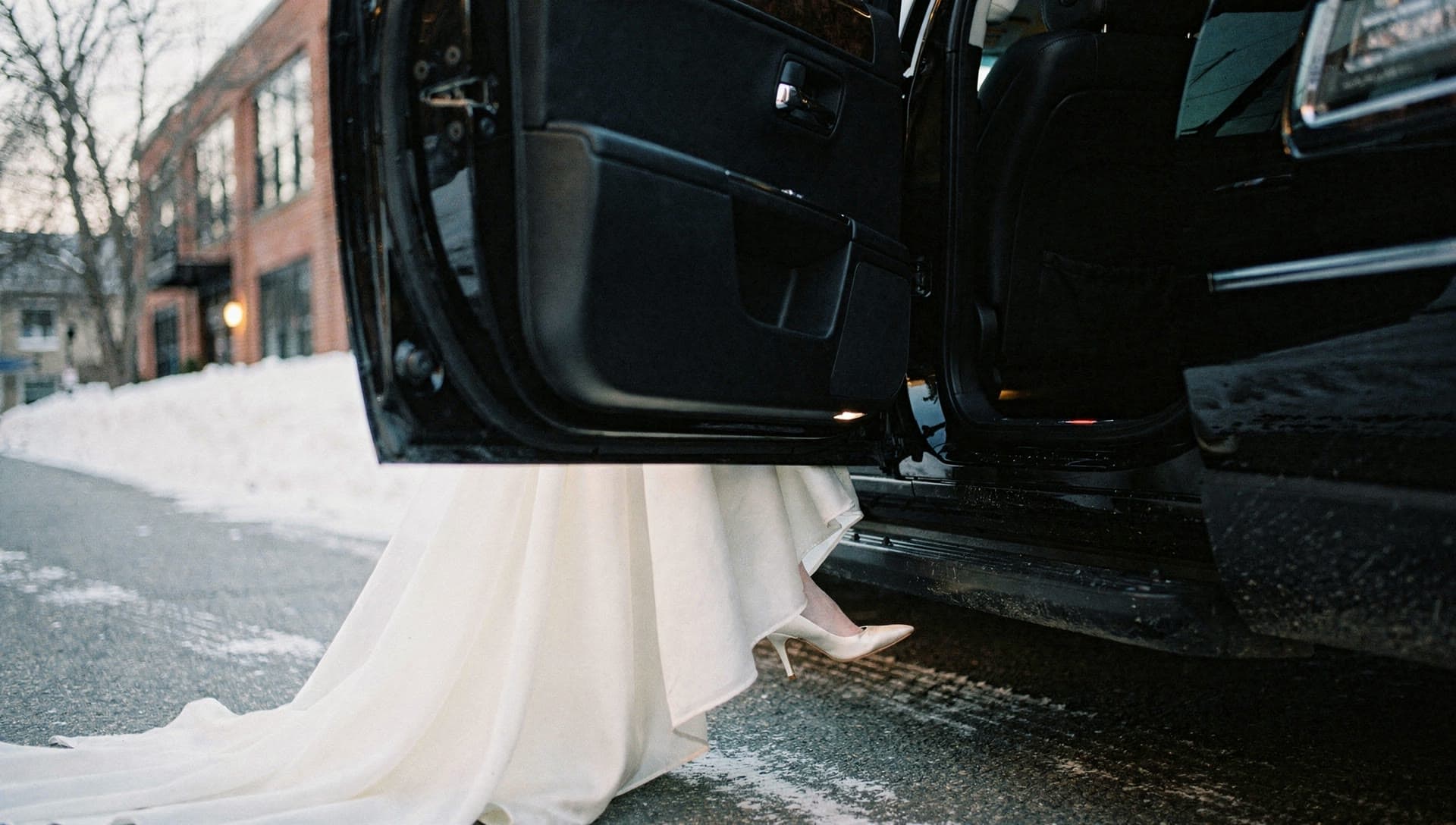
Keep it separate from the shuttle, and keep it yours for the whole window rather than sharing it with a run. The ten minutes alone between the ceremony and the reception is the only ten minutes of the day that belongs to nobody else, and every couple who has had it says the same thing about it.
A stretch limousine seats 10 and a Sprinter limo seats 12, so either carries the couple plus the wedding party if you want the whole group moving together. If you want the two of you alone, that is a sedan or an SUV and it is the cheaper answer as well as the quieter one.
Can the wedding party drink on the way?
Adults can. Massachusetts exempts the passengers of a vehicle used to transport persons for compensation from the open container law, while the driver may never possess an open container under any circumstances. If anyone in the party is under 21 the vehicle carries nothing at all.
How many people fit in a party bus, and how to pick the size
What should the transportation timeline look like?
Built backward from the ceremony, always. Everything before it has slack and nothing after it does.
- Nine to twelve months out: venue signed, rough guest count, vehicles held.
- Three months out: hotel block confirmed, which is what turns a guess at shuttle demand into a number.
- One month out: final vehicle plan and the rotation schedule, written down.
- Two weeks out: the full run sheet goes to your transportation company. Addresses, times, phone numbers, and the name of the one person on the day who can make a decision.
- The week of: confirm the ceremony time has not moved, because it moves more often than anything else on the sheet.
What should you hand over two weeks out?
- Every address, including the hotel entrance the shuttle should actually use rather than the postal address.
- The ceremony start time, which is the fixed point everything else is scheduled against.
- The number of guests who accepted the hotel block, not the number invited.
- A day of contact who is not the couple. On the day, the couple should not be answering a phone.
- Anyone with a mobility need, so the right vehicle is on the right run instead of the closest one.
- The realistic end time, and then the one you actually believe.
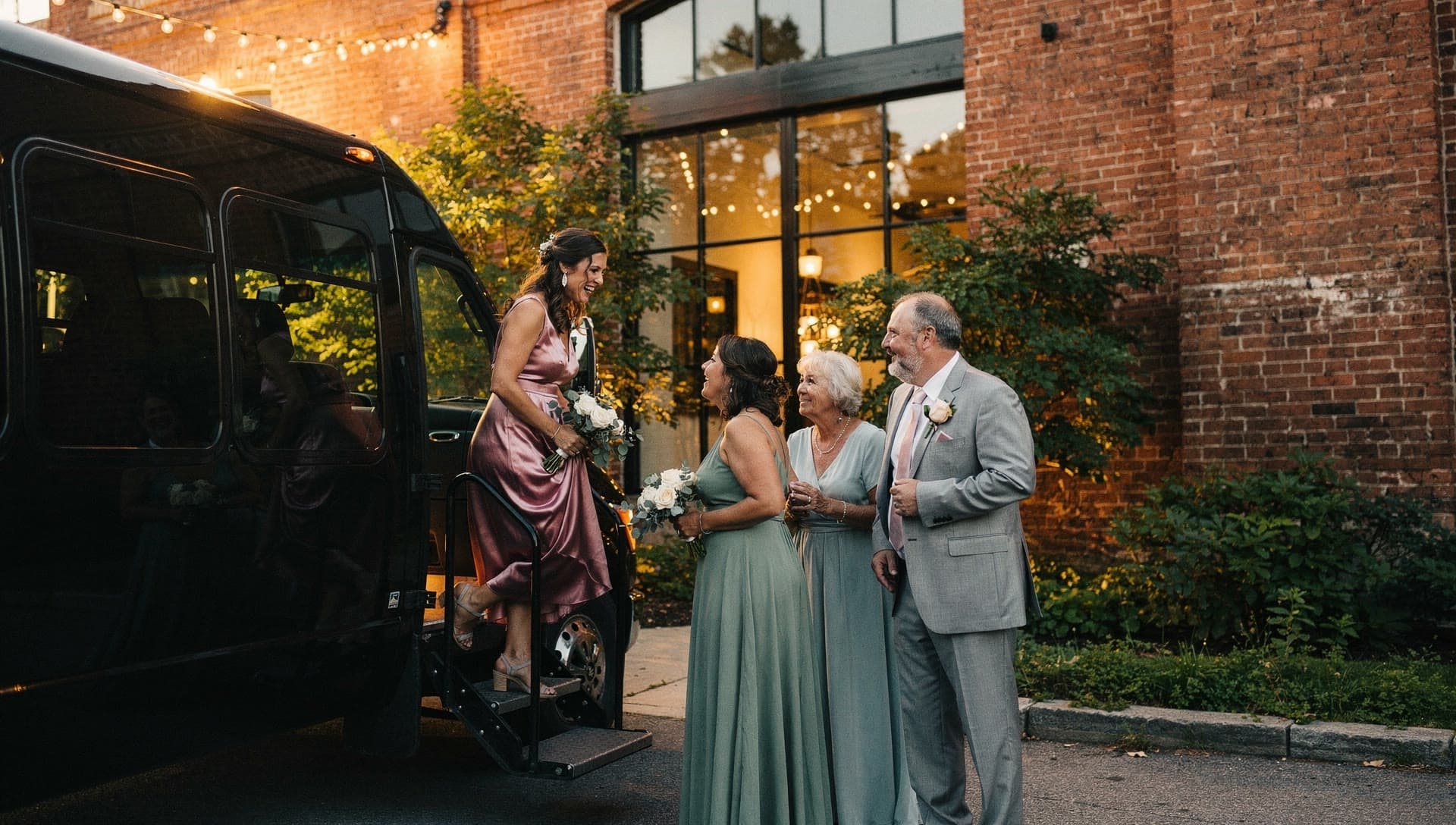
Weddings are the one job where being early is the entire product. Nobody remembers the car. They remember that the bridesmaids were at the church before the guests were, and that the last table got home.
Sources
- The Knot, Wedding Transportation Costs, Tips and Trends, citing The Knot Real Weddings Study. Updated April 23, 2025, reporting on 2024 marriages.
- The Knot Worldwide, The Knot Worldwide unveils the 2026 Real Weddings Study, reporting on weddings held in 2025. Published February 18, 2026.
- Massachusetts General Court, Massachusetts General Laws, Chapter 90 Section 24I, open container. Retrieved August 4, 2026.
Published August 4, 2026. Last updated August 4, 2026. We revisit these pages whenever the airport, the road or the regulation changes, and the date above moves with them.