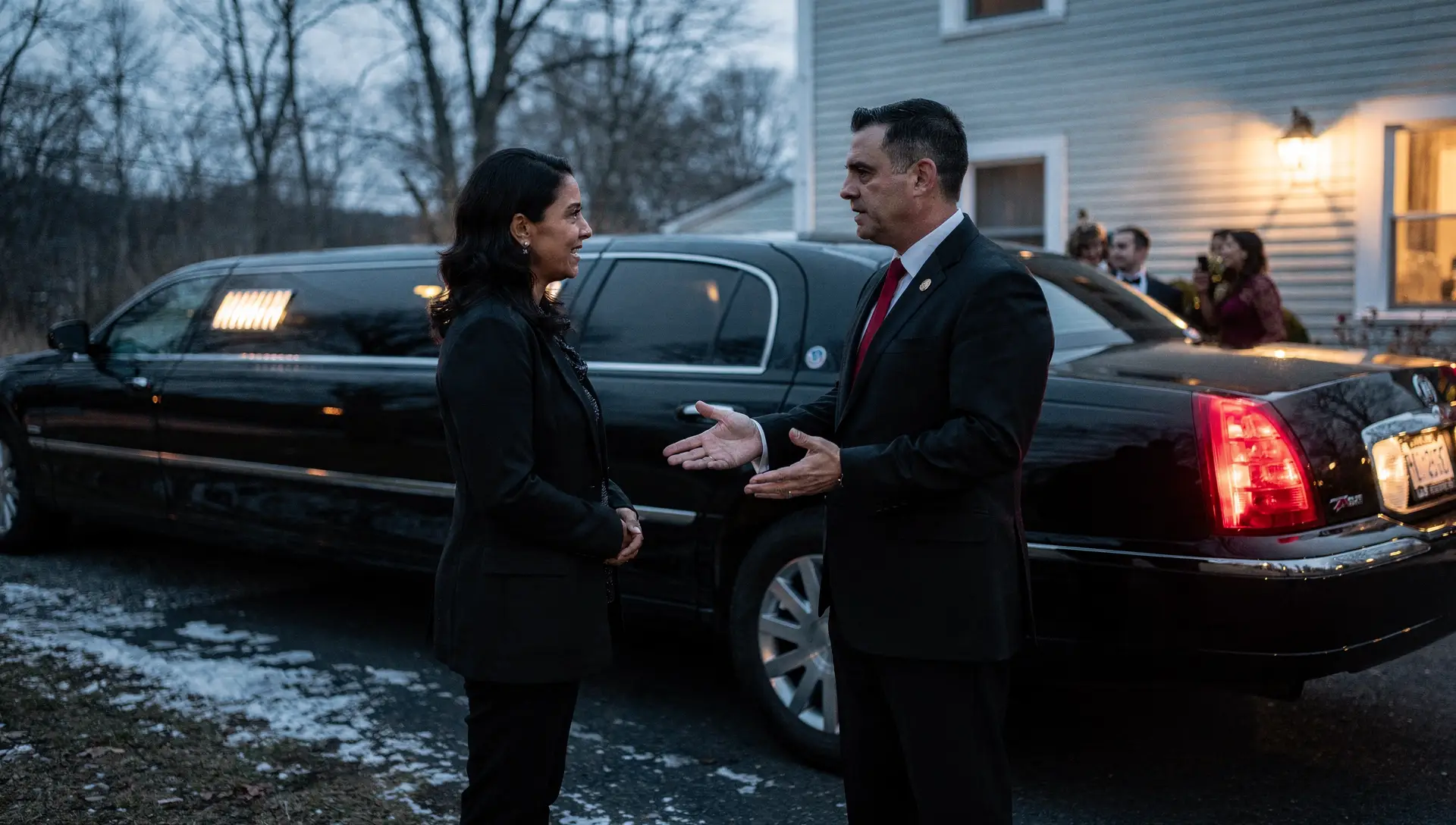
Most of what a parent has to judge about a prom vendor is atmosphere. A website, a phone manner, a photograph of a shiny vehicle. Transportation is one of the very few categories where a federal agency publishes the real answer for free, and almost nobody uses it.
What is a USDOT number, and why does it matter for a prom?
It is the federal registration number of the company carrying your child. A for-hire operator moving passengers across a state line, which in this corridor means any run that touches New Hampshire, needs operating authority from the Federal Motor Carrier Safety Administration to do it. That authority is public, and so is the safety record attached to it.
An MC number sits alongside it and shows what the carrier is authorized to move. On a passenger carrier it should read, in so many words, that the company is authorized to carry passengers. A number that comes back authorized for property is a number for a different kind of business.
How do you check a limousine company's safety record?
- Ask for the USDOT number, the MC number, or the exact legal name of the company. A real operator has all three and hands them over without hesitating.
- Open the SAFER Company Snapshot search at safer.fmcsa.dot.gov.
- Search by USDOT number. Confirm the operating status reads ACTIVE and that the authority line says the carrier is authorized to carry passengers.
- Read the inspection summary. It shows roadside inspections over the past 24 months, and the share that ended with a driver or a vehicle placed out of service, next to the national average for each.
- Check that the address on file matches the business you are talking to.
If the number returns a different company, or nothing at all, you have learned something more useful than any brochure could have told you. FMCSA's own consumer guidance, published under the name Look Before You Book, walks a traveler through the same checks, and it names one more worth borrowing: satisfactory is the top safety rating, conditional is a signal to slow down, and a carrier with a final unsatisfactory rating should not be operating at all.
Source: FMCSA, Passenger Carrier Safety Information
How much insurance is a limousine or party bus required to carry?
It depends on the size of the vehicle, and the whole rule fits in one line. Under 49 CFR 387.33, a for-hire carrier of passengers must hold at least $5,000,000 of coverage for a vehicle with a seating capacity of 16 or more including the driver, and at least $1,500,000 for a vehicle seating 15 or fewer.
| Vehicle | Published passenger capacity | Federal minimum |
|---|---|---|
| Stretch limousine | 10 passengers | $1,500,000 |
| Sprinter limo | 12 passengers | $1,500,000 |
| Small party bus | 10 passengers | $1,500,000 |
| Mid party bus | 22 passengers | $5,000,000 |
| Motor coach | 38 passengers | $5,000,000 |
| Large party bus | 50 passengers | $5,000,000 |
The useful consequence for a prom is this: the party bus your group actually wants is almost certainly on the five million dollar side of that line, and the stretch is on the one and a half million side. Asking how many the vehicle seats is a sharper question than asking whether the company is insured, because the seat count tells you which minimum applies.
Source: 49 CFR 387.33, minimum levels of financial responsibility
Every capacity in that table is one of ours, and each vehicle has its own page with what it seats, what fits in the back and what it is genuinely good for. Worth two minutes before the call, because knowing you want the 22 rather than the stretch changes the whole conversation.
See the fleet and what each vehicle seats
Does Massachusetts license the company as well?
Yes, and it is a separate layer from the federal one. A livery vehicle in Massachusetts is one designed to carry 15 or fewer passengers including the driver that moves people for hire or by pre-arrangement, and those vehicles carry a Massachusetts LIVERY registration plate rather than an ordinary one. Livery companies also hold a business or livery licence in the municipalities where they operate, issued by the local licence commission.
If the night touches an airport there is a third layer. An operator needs an agreement with Massport to work Logan at all, and Massport's application requires the company to attach its Massachusetts DPU, FMCSA or local permit along with a certificate of insurance for every vehicle it wants permitted.
Which means the plate on the back of the vehicle is itself a piece of evidence. Look at it while the group is loading. It takes two seconds.
What changed in limousine safety law, and why does it come up?
On October 6, 2018, a stretch limousine crash in Schoharie, New York killed 20 people. The National Transportation Safety Board investigated it and published report NTSB/HSR-19/02, which found that the non-original seats and lap belts fitted into the stretched passenger compartment had not been designed for crash protection. The board recommended that lap and shoulder belt combinations become standard equipment in limousines, and that seating systems in modified vehicles meet minimum performance standards.
Congress followed. The Infrastructure Investment and Jobs Act, signed on November 15, 2021 as Public Law 117-58, carries limousine provisions at sections 23015 and 23023 directing federal regulators to require belts at every designated seating position in a limousine and to bring these vehicles inside the federal safety standards they had been sitting outside of.
You do not need any of that at a dinner table. You need to know why asking whether every seat has a belt, and whether you can see them, is an ordinary and reasonable question, and why an operator who answers it plainly is telling you something about how the rest of the night will go.
Source: NTSB report HSR-19/02, Schoharie limousine crash
What should you ask on the phone?
- What is your USDOT number? Then look it up before the second call, not after the deposit.
- Is the vehicle you are sending the vehicle in the photograph on your website? Ask for a photo of the actual one if the answer takes a moment.
- How many does it seat, and does every seat have a belt? The seat count also tells you which federal insurance minimum applies.
- Who is driving, and what licence do they hold for a vehicle that size? FMCSA's guidance is to confirm a current commercial licence and current medical certification where the vehicle requires them.
- What is your policy on alcohol on board, and what happens if a chauffeur finds some?
- What exactly is the itinerary: pickup addresses, the venue, any stops in between, and the drop-off order at the end of the night?
- Who do I call at 11 p.m. if something changes, and will a person answer?
- What is the total, in writing, before I commit to anything?
Eight questions, five minutes, and the answers sort the market faster than any amount of scrolling. The last one matters more than parents expect, because a number agreed in a phone call and a number that arrives afterward are two different things.
A prom is the one booking where the parent is buying and the kid is riding. Ask me the licence questions. I would rather spend ten minutes answering them than have somebody hand over a deposit and spend the whole night wondering.
What does our own record say?
USDOT 4086308 and MC-1555691, federally authorized as a Motor Carrier of Passengers, with a 0.0 percent driver out of service rate. Not one of those figures comes from us. They sit in the federal registry, and the reason they are printed on this page is so you can go and read them there instead.
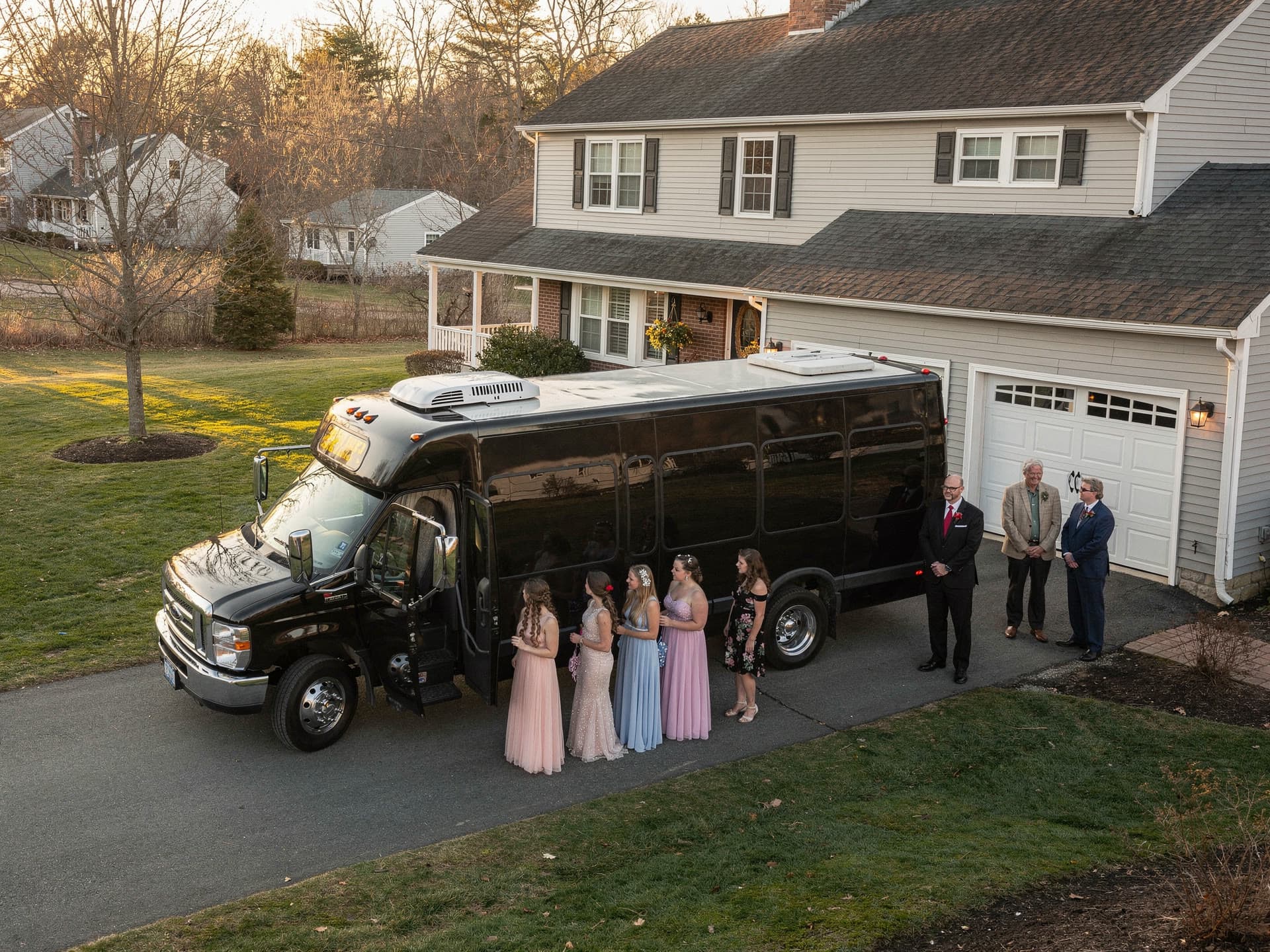
Our vehicles carry Massachusetts livery plates, and the stretch limousine has the federal numbers lettered on its door in the open, where a parent standing in a driveway can read them. That was a deliberate choice. You should be able to check who is driving your child before the door closes.
What about the night itself?
- Agree the itinerary before the night rather than during it, including every pickup address and the order of the drop-offs at the end.
- Name one parent as the contact for the whole group so a chauffeur has one number to call rather than eleven.
- Tell the chauffeur which house the group is finishing at. An after-party address that appears at midnight is how timelines come apart.
- Send the head count you actually have. A group of fourteen in a vehicle built for twelve is a problem no one wants to solve in a driveway.
- Put the phone number of the company in every parent's phone, not just the one who booked.
What does prom transport cost?
Prom transport is quoted per trip and priced by the vehicle rather than by the seat, and you get the figure in writing before you commit. Tell us the head count, the pickup addresses and the venue, and we will tell you which vehicle is the right shape for the group and what the night comes to.
Sources
- Federal Motor Carrier Safety Administration, SAFER Company Snapshot. Retrieved August 3, 2026.
- Federal Motor Carrier Safety Administration, Passenger Carrier Safety Information. Retrieved August 3, 2026.
- Cornell Legal Information Institute, 49 CFR 387.33, financial responsibility minimum levels. Retrieved August 3, 2026.
- National Transportation Safety Board, Report HSR-19/02, Schoharie, New York limousine crash. October 2019.
- U.S. Congress, Infrastructure Investment and Jobs Act, Public Law 117-58. November 15, 2021.
- City of Cambridge, Massachusetts, Apply for a livery or limousine licence. Retrieved August 3, 2026.
Published August 4, 2026. Last updated August 4, 2026. We revisit these pages whenever the airport, the road or the regulation changes, and the date above moves with them.